CFD ANALYSIS FOR CAR PARK SMOKE CONTROL
CFD Analysis Services for Car Park Smoke Control: Enhancing Fire Safety and Ventilation Efficiency
Car parks, particularly underground and enclosed parking structures, require carefully designed ventilation and smoke control systems to ensure occupant safety during fire events. Due to limited natural ventilation and confined spaces, smoke generated from vehicle fires can quickly accumulate and spread throughout the parking facility, creating hazardous conditions for occupants and emergency responders.
Computational Fluid Dynamics (CFD) analysis provides an advanced engineering approach for evaluating smoke movement and ventilation performance in car park environments. Through detailed CFD simulations, RIA GULF helps engineers and building designers assess smoke propagation during fire scenarios and optimize ventilation systems to ensure effective smoke control and safe evacuation.
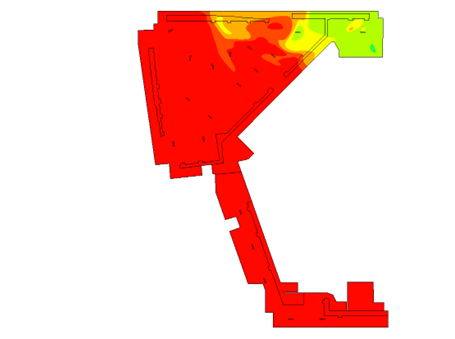
Introduction to CFD Analysis for Car Park Smoke Control
Computational Fluid Dynamics (CFD) is a powerful numerical simulation technique used to analyze airflow behavior, heat transfer, and gas movement within complex spaces.
In car park smoke control design, CFD simulations help engineers evaluate how smoke behaves during a vehicle fire and how ventilation systems influence smoke removal. These simulations provide detailed insights into:
Smoke propagation and accumulation patterns
Airflow distribution within the parking structure
Performance of jet fans and mechanical ventilation systems
Temperature distribution during fire scenarios
Interaction between smoke and ventilation airflow
By simulating realistic fire scenarios, engineers can better understand smoke behavior and design systems that effectively control smoke spread.
RIA GULF’s Expertise in Car Park Smoke Control CFD Analysis
RIA GULF provides specialized CFD simulation services for smoke control and ventilation design in underground and enclosed car parks. The company’s engineering team has strong expertise in fluid dynamics, fire dynamics, turbulence modeling, and mechanical ventilation analysis.
Through advanced CFD studies, RIA GULF supports architects, fire safety engineers, and building consultants in designing efficient smoke control systems that improve fire safety while complying with international design standards.
Optimizing Jet Fan Ventilation Systems
Jet fan systems are widely used in modern car parks to control smoke movement and maintain acceptable air quality during normal operation. Proper placement and configuration of these fans are critical to ensure effective smoke removal during a fire event.
Using CFD simulations, RIA GULF evaluates:
Jet fan placement and orientation
Airflow patterns generated by ventilation systems
Effectiveness of smoke extraction systems
Potential areas of smoke stagnation
Interaction between jet fans and exhaust vents
These simulations help optimize ventilation system design to ensure efficient smoke clearance throughout the parking facility.
Compliance with Fire Safety Codes and Standardss
Many international building codes and fire safety guidelines require performance-based analysis for car park ventilation and smoke control systems. CFD analysis provides a scientifically validated method to demonstrate compliance with these requirements.
RIA GULF supports project teams by conducting CFD studies that assist in meeting regulatory requirements and international standards for smoke control and ventilation design.
Enhancing Car Park Safety Through Advanced Simulation
By combining advanced CFD modeling techniques with fire safety engineering expertise, RIA GULF helps building designers develop effective smoke management solutions for car park facilities.
Through detailed simulations of smoke movement and ventilation performance, engineers can evaluate multiple design scenarios, optimize system performance, and ensure that parking structures maintain safe conditions during emergency situations.