
CFD ANALYSIS FOR COOLING TOWERS
CFD Analysis for Cooling Towers: Improving Thermal Efficiency and Performance
Cooling towers play a critical role in industrial facilities, power plants, and large HVAC systems by removing excess heat from process water and maintaining optimal operating temperatures. The performance of cooling towers depends heavily on efficient airflow distribution, heat exchange efficiency, and proper interaction between air and water streams.
Computational Fluid Dynamics (CFD) analysis provides a powerful engineering approach to study airflow behavior, heat transfer, and thermal performance within cooling tower systems. Through advanced CFD simulations, RIA GULF helps engineers and facility operators evaluate cooling tower performance, identify inefficiencies, and optimize system design to improve cooling efficiency.
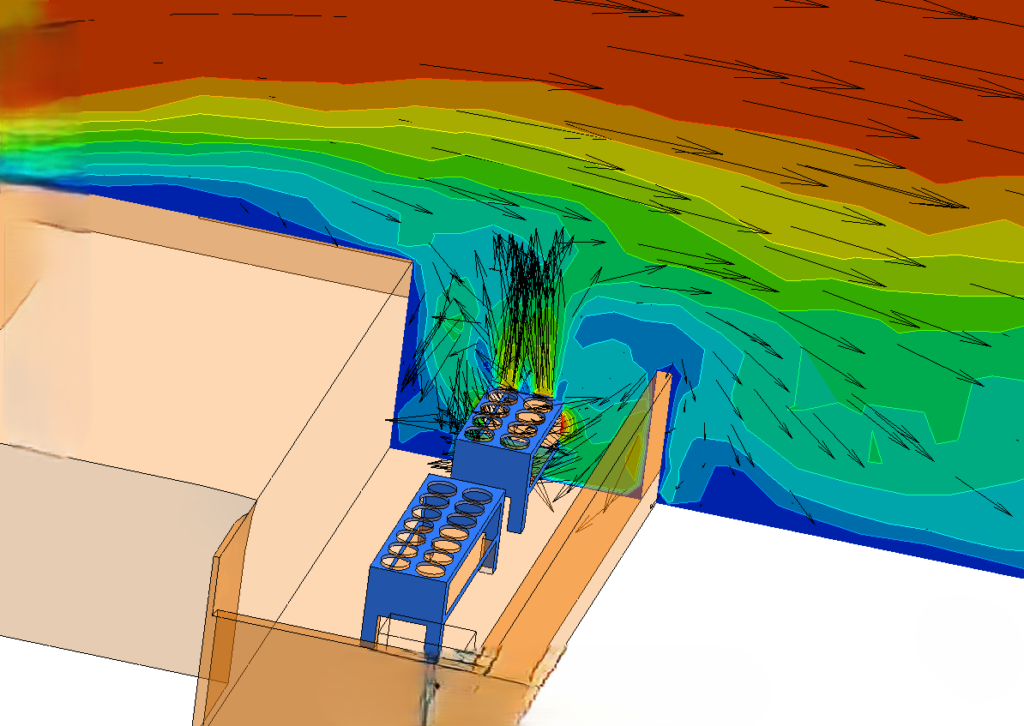
Introduction to CFD Analysis for Cooling Towers
Computational Fluid Dynamics (CFD) is a numerical simulation technique used to analyze fluid flow, heat transfer, and multiphase interactions within complex systems.
In cooling tower applications, CFD analysis helps engineers simulate the interaction between airflow, water droplets, heat transfer surfaces, and surrounding environmental conditions. These simulations provide valuable insights into:
Airflow distribution through cooling tower structures
Heat transfer between water and air streams
Temperature distribution within the tower
Water droplet dispersion and evaporation behavior
Influence of ambient wind conditions on tower performance
By accurately modeling these processes, engineers can evaluate cooling tower efficiency and identify opportunities for performance improvement.
RIA GULF’s Expertise in Cooling Tower CFD Analysis
RIA GULF provides specialized CFD simulation services for evaluating the thermal and aerodynamic performance of cooling tower systems. With strong expertise in fluid mechanics, heat transfer modeling, multiphase flow analysis, and industrial ventilation, the company supports engineering consultants, plant operators, and facility designers in optimizing cooling tower performance.
Through advanced CFD studies, RIA GULF helps identify operational issues and provides engineering recommendations that enhance cooling efficiency and system reliability.
Evaluating Airflow Distribution and Tower Performance
Uniform airflow distribution is essential for achieving efficient heat transfer within cooling towers. Poor airflow patterns can reduce cooling effectiveness and create areas of reduced heat exchange performance.
Using CFD simulations, RIA GULF evaluates:
Airflow distribution within cooling tower structures
Velocity profiles across cooling tower fill regions
Influence of structural components on airflow behavior
Interaction between airflow and water spray systems
Impact of fan performance on cooling efficiency
These insights help optimize tower geometry, fan operation, and airflow paths to improve overall system performance.
Assessing Environmental and Wind Effects
Cooling towers are often exposed to varying environmental conditions that can influence their performance. External wind conditions may disrupt airflow patterns within the tower and reduce cooling efficiency.
CFD analysis enables engineers to study the impact of:
Crosswinds and ambient wind conditions
Recirculation of warm exhaust air
Interaction between multiple cooling towers
Placement of towers within industrial facilities
By understanding these environmental effects, engineers can design cooling tower layouts that minimize performance losses caused by unfavorable airflow patterns.
Improving Energy Efficiency and Operational Reliability
Optimizing cooling tower performance can significantly reduce energy consumption and improve the reliability of industrial cooling systems.
Through detailed CFD simulations, RIA GULF helps clients:
Improve heat rejection performance
Optimize fan operation and airflow distribution
Reduce hot air recirculation within cooling towers
Enhance cooling efficiency during peak operating conditions
These improvements contribute to more stable plant operation while reducing operational costs.
Supporting Design Optimization and System Upgrades
CFD analysis provides valuable insights during both the design phase and operational evaluation of cooling tower systems. Engineers can use CFD simulations to test different design configurations and identify the most efficient solution before implementation.
RIA GULF supports cooling tower projects by providing CFD studies that help optimize system design, improve thermal performance, and ensure reliable long-term operation.