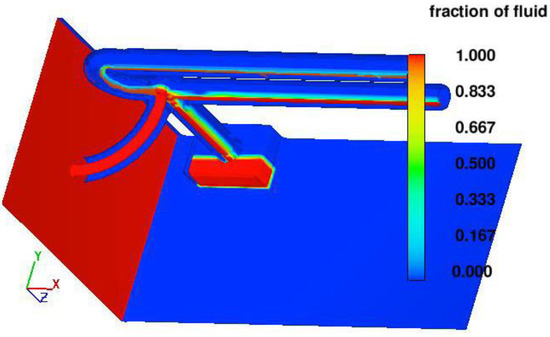
Computational Fluid Dynamics (CFD) has emerged as a powerful tool in engineering and design, offering insights into fluid flow behaviour and optimizing various systems. In the context of Middle Eastern countries such as Oman, Saudi Arabia, Qatar, and Kuwait, where water resources are precious, CFD analysis plays a vital role in understanding flow patterns, improving efficiency, and ensuring optimal performance of water reservoirs and lagoons. In this blog post, we will explore the significance of CFD analysis for water reservoirs and lagoons in the Middle East and discuss how it can be leveraged to enhance their functionality.
Efficient flow patterns within water reservoirs and lagoons in the Middle East are essential for water conservation and sustainable water management. CFD analysis allows for accurate prediction and visualization of flow patterns, helping engineers identify potential dead zones and optimize the design accordingly.
Water stagnation within reservoirs and lagoons can lead to several undesirable consequences, including decreased water quality, increased sedimentation, and the formation of anaerobic zones. It is crucial to identify areas where water tends to stagnate and to assess the age of water, i.e., the time it takes for water to flow through the system. This understanding enables engineers to implement design modifications that minimize stagnation and enhance water quality.
Middle Eastern countries often face challenges related to sedimentation and erosion in water reservoirs and lagoons due to factors such as arid climates and limited water resources. CFD analysis provides insights into sediment transport, deposition, and erosion patterns, helping engineers identify potential problem areas and implement effective mitigation strategies.
Energy consumption is a significant consideration in the operation of water reservoirs and lagoons in the Middle East. CFD analysis can optimize energy usage and reduce associated costs by evaluating flow patterns, pressure drop, and pump sizing.
CFD analysis has become an indispensable tool in designing, optimizing, and evaluating water reservoirs and lagoons in Middle Eastern countries such as Oman, Saudi Arabia, Qatar, and Kuwait. By providing insights into flow patterns, sedimentation, structural integrity, and energy efficiency, CFD models enable engineers to make informed decisions and implement effective measures to enhance performance and functionality.